
Decarbonizing electricity: New urgency for national security & economy
Electricity decarbonization suddenly seems urgent for national security, trade & economy. We review electricity demand rise, India's duck curve, its LDES path & share seed opportunities + our updates.

Hi there,
In recent months, a few nations have been served stark reminders of how important energy transition is for them. But these reminders have not come from a climate lens, rather as enormous challenges posed to their national & energy security, trade & economy, and ultimately, the daily lives of their people.
First, it were Spain, Portugal, Andorra & France. In April, daily life came to screeching halt within minutes in Iberia due to a widespread blackout. Thankfully, the black-mirror-ish scenario, which affected trains, airports, and even traffic lights, lasted only 10 hours. Grid responsiveness & stability seem to be the culprit, cautioning us about how nightmarish a transition without grid modernization can be.
And now, it’s India that faces huge economic & security struggle due to the US tariffs, imposed apparently for its energy import choices. We wrote in our last issue in June that decarbonization is not optional for India, but a strategic necessity. The current trade spat with the West further intensifies the need to accelerate it.
Over these same months, our team has focused on decarbonization of electricity in India — meeting experts, diving into research, organizing debates, writing reports & opinions — and also identified seed investment opportunities. In this issue, we share our work till date & our current opinions about electricity decarbonization for India.
Summary of this issue:
📃 Report: Early-stage opportunities in Decarbonizing Electricity
📅 Event: Debate on Long Duration Energy Storage (LDES)
📃 Opinion: What’s the LDES path for India?
💡 Portfolio Spotlight: EarthEn Energy unveils Heat Battery
👩💻 Portfolio Jobs
📃 Report: Early-stage opportunities in Decarbonizing Electricity
We published our inaugural report on ‘India's role in decarbonization & growing seed-stage opportunities’ a few months ago. Building further on that, the first deep dive we took was on electricity, to identify seed opportunities for decarbonizing electricity in India. Here’s a link to access the report, followed by a brief from it.
Globally, we’re demanding more & more electricity every year. As per the IEA, global electricity demand in 2024 grew faster (4.3%) than total energy demand (2.2%) and GDP growth (3.2%). This is driven by increasing industrial & mobility electrification, hotter weather resulting in more cooling needs, and surging data centres demand. (A silver lining is that 80% of new global generation capacity in 2024 was renewable.)
India's electricity demand is growing even faster, averaging 9% annual growth since 2021. Although solar is now the cheapest source of power in India (most recently solar + storage has beaten coal with a bid under ₹6/kWh), and policy has been conducive for renewables over last few years (e.g. with mandatory storage obligations & time-of-day pricing), yet the country keeps adding coal for base-load power, an anti-thesis to reducing emissions. India’s grid is also not the most resilient.
Therefore, India needs to find ways to have a lot more "dispatchable" renewable energy. This means unique opportunities exist for startups to capture the growing demand while leapfrogging traditional ways of building energy infrastructure.
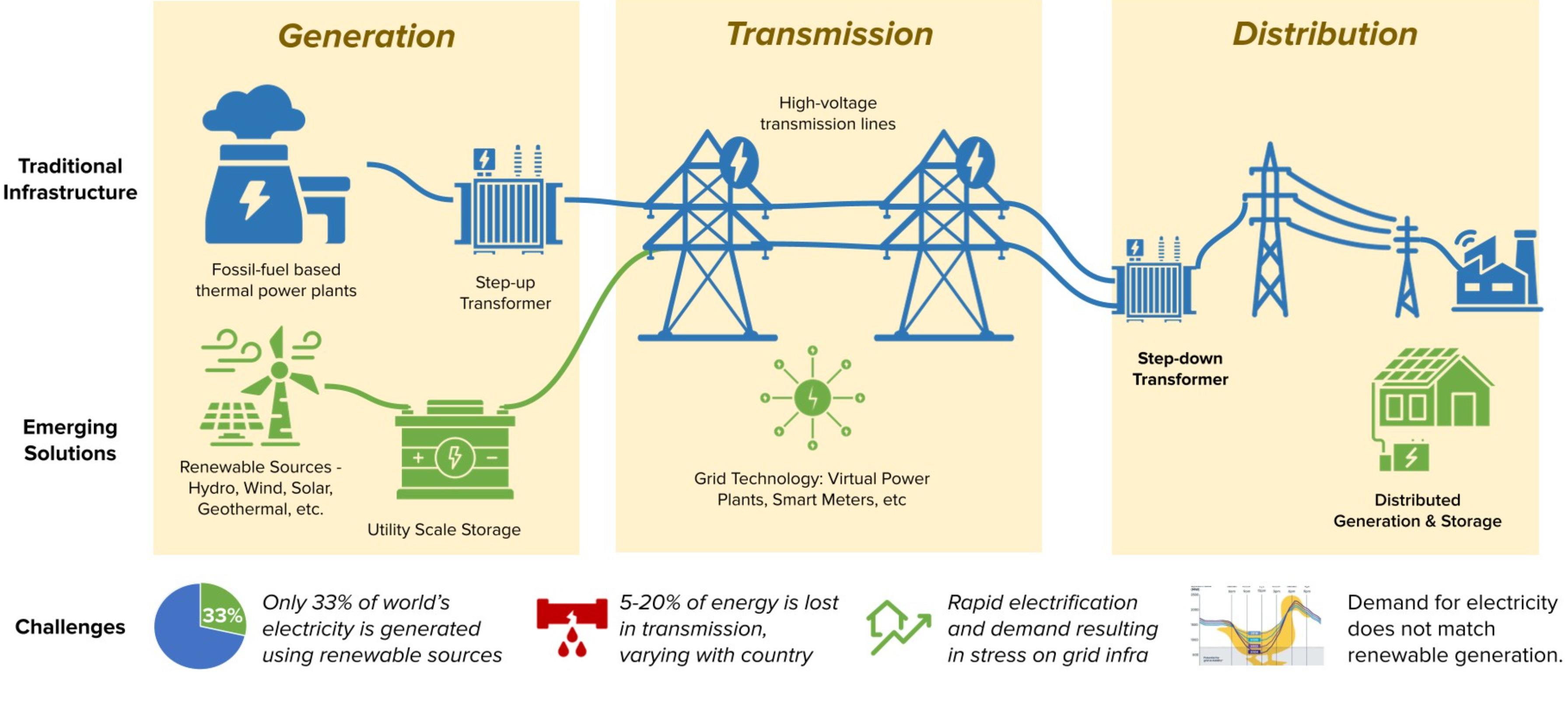
As seed investors, we see several opportunities for early-stage innovation here. While details of all opportunity areas are in the report, two themes specifically stand out:
1. Need for grid resilience & enabling renewable integration
Like any grid, the Indian grid faces fluctuations of demand & supply: Solar is abundant during the day & in summer, but not available at night or in cloudy skies. But demand for energy is higher during evenings and in seasons needing high cooling or heating. This leads to a peak deficit, which looks like a “duck” on a graph. As we add more solar every year, the belly of this duck keeps getting deeper.
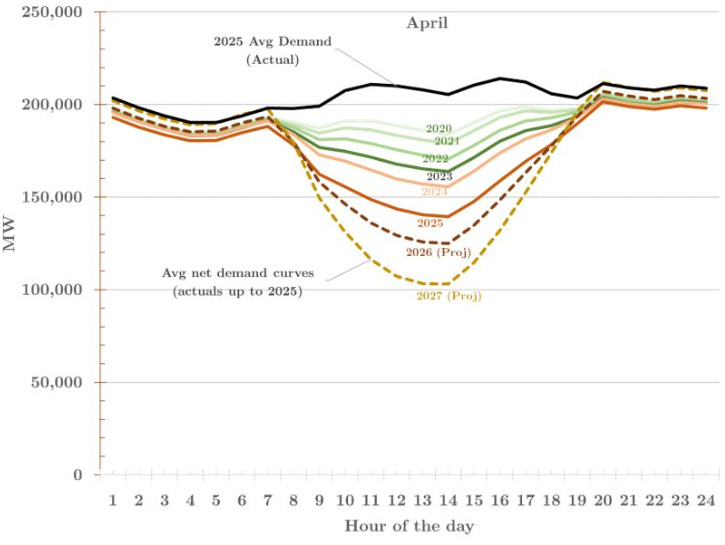
Therefore, solutions are needed to manage the growing demand & the intermittency introduced by renewables. We need new startups that can provide storage (at grid or decentralized), make the grid resilient against outages, and improve grid flexibility.
2. Riding the renewables wave to improve performance & adoption
Solar & wind are the cheapest energy sources in India now. Adoption of renewables is happening rapidly & it’s now a large-developer dominated industry. Yet, this maturing market creates space for startups to solve the emerging challenges, like financing distributed solar, providing trained workforce, and managing end-of-life solar panels.
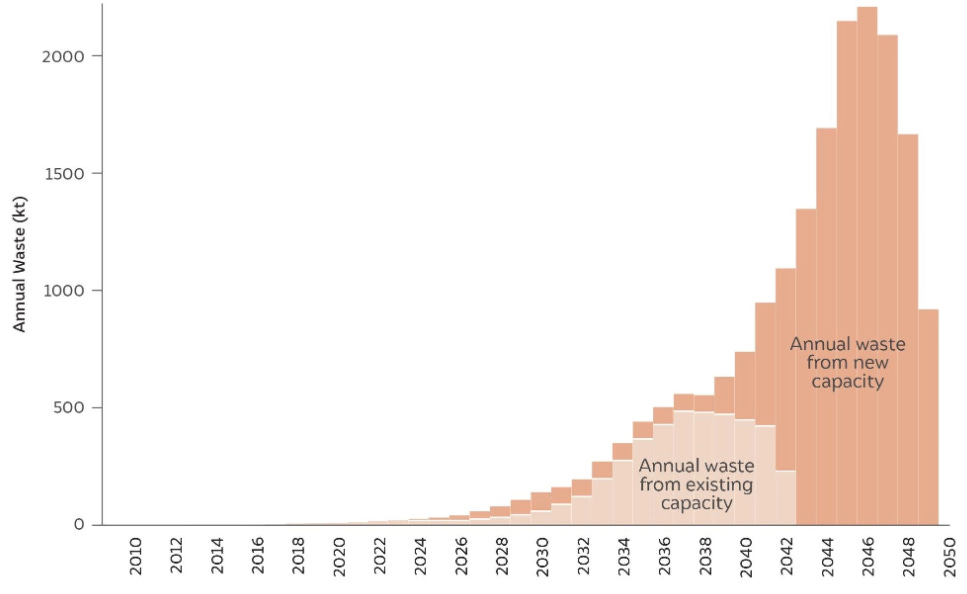
E.g. India’s installed 66.7 GW solar capacity by FY23 has already generated about 100 kilotonnes (kt) of cumulative waste, and it’ll increase to 340 kt by 2030. As we add new capacity, this waste is expected to increase exponentially after 2035.
🗓️ Event: Expert Panel on Long Duration Energy Storage
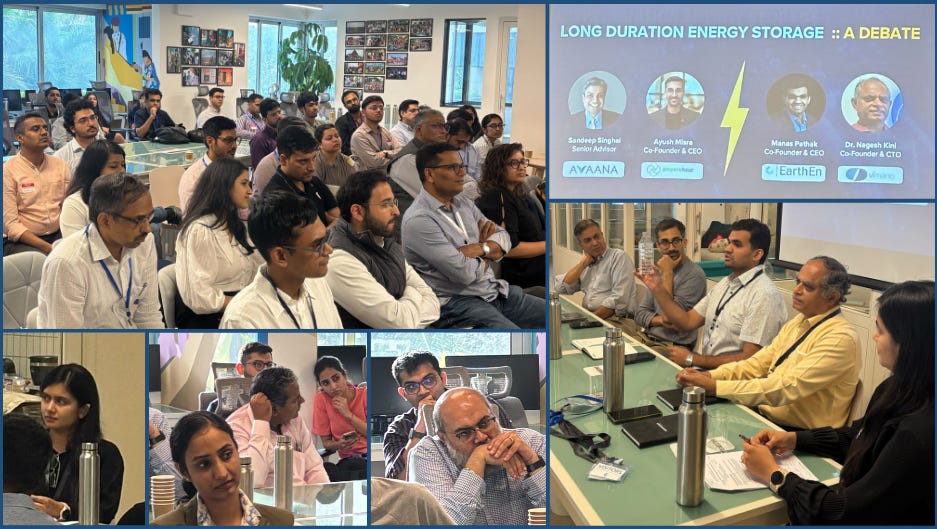
Momentum Capital hosted a stimulating debate on the long-duration energy storage (LDES) path for India with an expert panel in Mumbai.
The panel included: Sandeep Singhal (Advisor, Avaana Capital; Co-founder, Nexus Venture Partners), Ayush Misra (CEO & Co-founder, AmpereHour Energy), Manas Pathak (Co-founder & CEO, EarthEn Energy), and Dr. Nagesh Kini (Co-founder & CTO, Vimano; Ex-Principal Scientist, Thermax). The session was moderated by Bharti Singhla from our team.
Our gratitude to our panelists and those who made time to be there in person! It was an excellent & ‘energizing’ evening and we summarize our takeaways below.
📃 Opinion: What’s the LDES path for India?
The LDES debate brought forth different perspectives on the key questions about grid-scale storage. We wrote a detailed article on the ‘Takeaways from the LDES debate’, but here’s a short summary of the same:
1. Defining “long” in long duration:
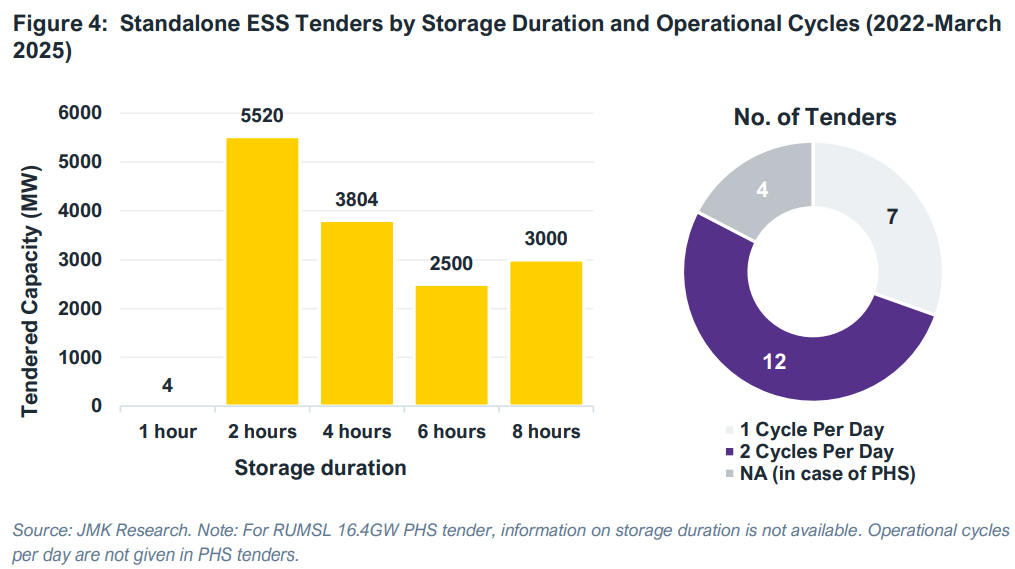
How many hours of storage is truly needed for the grid? Is it 4-8 hrs or 10-24 hrs or >24 hrs? While current solar penetration has mostly warranted 2-4 hrs of storage for peak-load shaving, multi-day storage to store and use renewable energy is rising. Many utilities & developers are asking for longer duration too, as reflected in tenders.
2. So, what will be the mix of storage requirements for the grid in the long-run?
Of course, the answer “depends” on the nature of the demand curve and renewable energy mix. In Delhi, e.g., AmpereHours’ batteries cycle for 4 hrs a day: 2 hrs in morning + 2 hrs in evening. As we add more solar, this is expected to increase.
Moreover, each hour & season is different. A recent SECI tender provides a unique structure where the power provider has to follow the dispatch curve of the energy off-taker. This will require more nuanced energy storage solutions.
In regions with high wind or solar variability, the backup duration needs to be higher. India, with great solar & wind potential, could learn from how California has used lithium ion for peak-load shaving and has floated tenders for LDES of 12+ hours of dispatch.
3. Which storage technologies will win in India?
Has the LFP cost decline from China defined the winner already, or is there a market for other technologies? Grid-scale storage can be build from a variety of technologies — electrical (super-capacitors), electro-chemical (Li-ion or redox flow batteries), mechanical (gravity- or compressed air-based), thermal (molten salt) or chemical (hydrogen or gas-based engines). Each of these tech have their pros & cons:
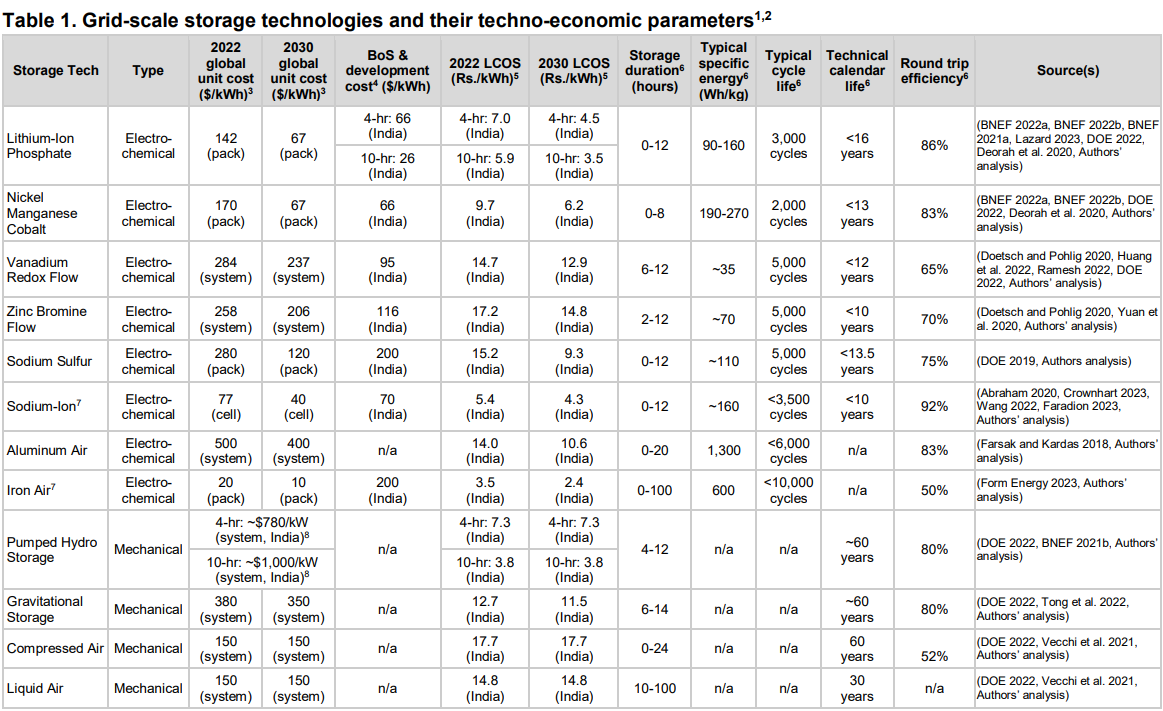
Today, global grid-scale storage is dominated by pumped hydro storage (PHS), but electro-chemical’s share is growing (BESS). India too has large projects with PHS and BESS is yet to catch up. While PHS is most cost-effective today in ‘levelized cost of storage’, it has high upfront costs, geographical limits, and kills local biodiversity. So, we need alternate technologies for the grid.
Now, when deciding what will win, the following matters:
Cost, Cost, Cost: For any tech to win at scale, it needs to achieve solar + storage cost benchmarks of INR 5 / kWh. None have achieved this yet, but LFP is most likely given current cost curves. Startups building new tech, run your techno-economic models to compete with the projected price of LFP in 2032, not today!
Supply chain readiness: Demand for flexible storage is taking off, so the tech that has the supply chain & cost curves ready to ride this wave will win. Vanadium redox flow and LFP have a head start, and other technologies need to catch up to deliver at scale.
Inertia: Grid-scale storage also needs to meet technical criteria, esp. mechanical inertia necessary for grid stability. Electrochemical processes aren’t able to provide this. Mechanical systems are better at it. Recently, Google announced a deal with a compressed-air storage company, Energy Dome, which has also recently executed a pilot project with NTPC in India. These developments further validate the need for non-electrochemical systems.
In summary, the jury is still out on which tech will dominate grid storage. Given the different duration and types of energy required, our view is that it’ll be a combination of mechanical, electrochemical and chemical systems. We also expect thermal storage to dominate industrial applications.
At Momentum, we believe there’s a huge opportunity for innovation around energy storage systems globally. We’ve invested in two startups that are pioneering storage innovation, namely Earthen Energy (innovating on supercritical CO2 based thermo-mechanical batteries) and Vimano (innovating on membranes for redox flow and electrolyzers).
💡Portfolio Spotlight: EarthEn unveils Heat Battery
EarthEn Energy is a pioneering startup building innovative thermo-mechanical energy storage to solve the renewable intermittency problem. It uses supercritical carbon dioxide in a closed loop, providing low-cost & scalable storage for 4-100+ hours.
The company is co-founded by Manas Pathak and Palash Panja, two exceptional chemical engineers, based on their research and industrial experiences. We invested in EarthEn in 2024, and here’s a brief on why we invested in them.
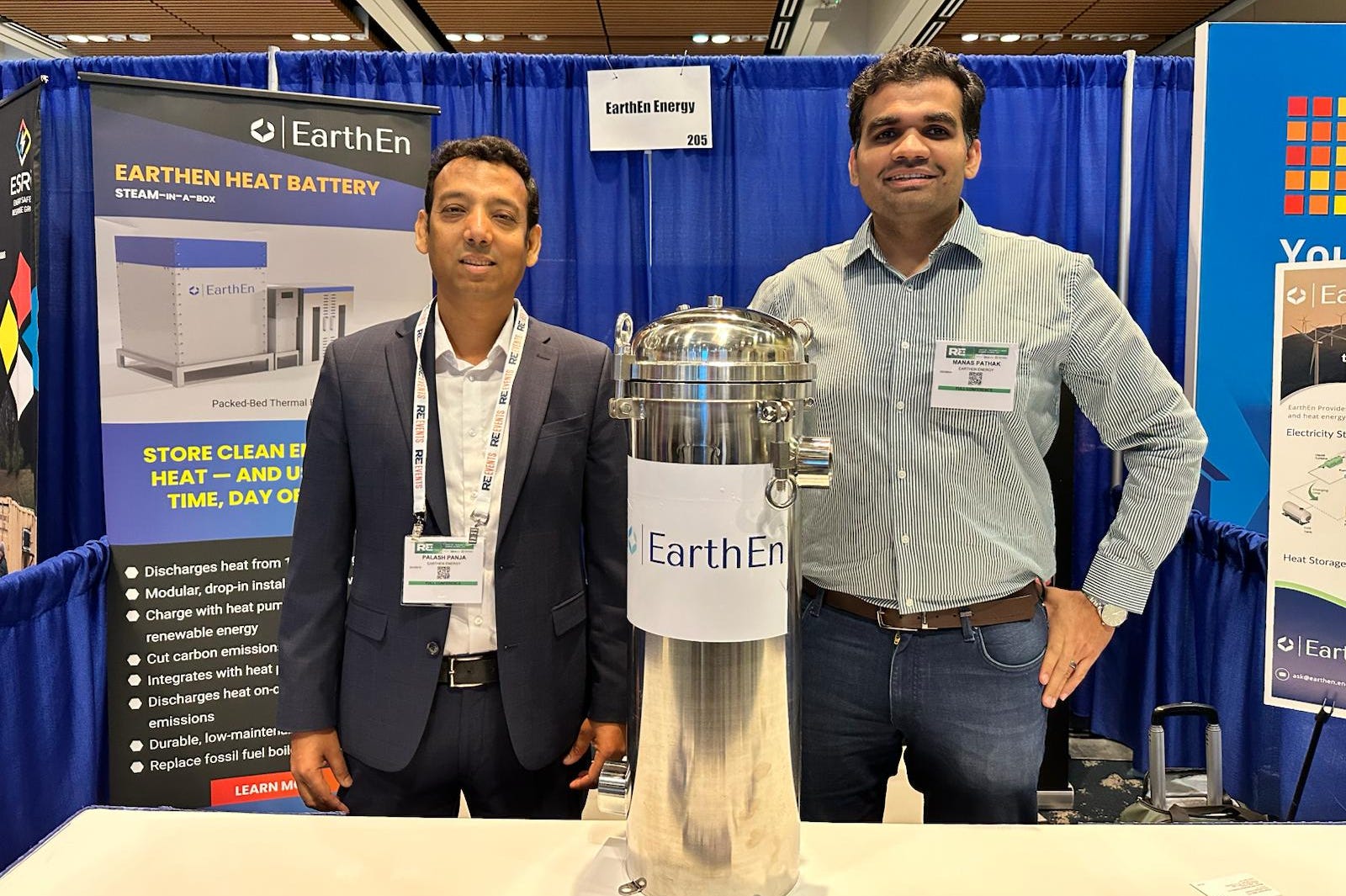
EarthEn recently unveiled a “Heat Battery” at the RE+ Storage event in Santa Clara in July. It’s a breakthrough solution to decarbonize industrial heat and store excess renewable electricity. It delivers high-temperature steam or hot air (200–500 °C) with 4–12 hours of storage, up to 90% efficiency, and modular scalability, while also capturing waste heat. Backed by support from DOE, NSF, LaunchTN, CalSEED, and others, the technology is designed to cut emissions, enhance energy resilience, and serve industries like food, textiles, and chemicals. Read details here.
🧑💻 Portfolio Jobs:
1. Customer Success & Deployments Lead, Focal (San Francisco • Full-time • Hybrid)
Focal is hiring a Customer Success & Deployment Lead to own the customer journey from contract signing through to installation & product activation. In this ownership role to ensure every customer gets live smoothly, on time, and is delighted to work with Focal, you’ll work directly with the founders & be integral to closing revenue.
2. Sales Professional, Dharaksha EcoSolutions (Faridabad • Full-time • Hybrid)
Dharaksha EcoSolutions is hiring a Sales Professional to evangelize their innovative packaging material made from rice husk. You will be responsible for reaching out to potential clients, conducting product presentations, understanding customer needs, negotiating sales deals, closing sales, and maintaining customer relationships.
Momentum Capital is a pre-seed/seed investor in climate tech, health and cross-border models. We champion Indian-origin founders and our team is spread across the US, Canada & India. More: Portfolio | Insights.
That’s it for this issue. We’re always looking for innovative startups working on more ways to ensure dispatchable clean energy. So, if you are working on innovations in clean energy generation, storage, system integration or software, do reach out!
— Momentum Team